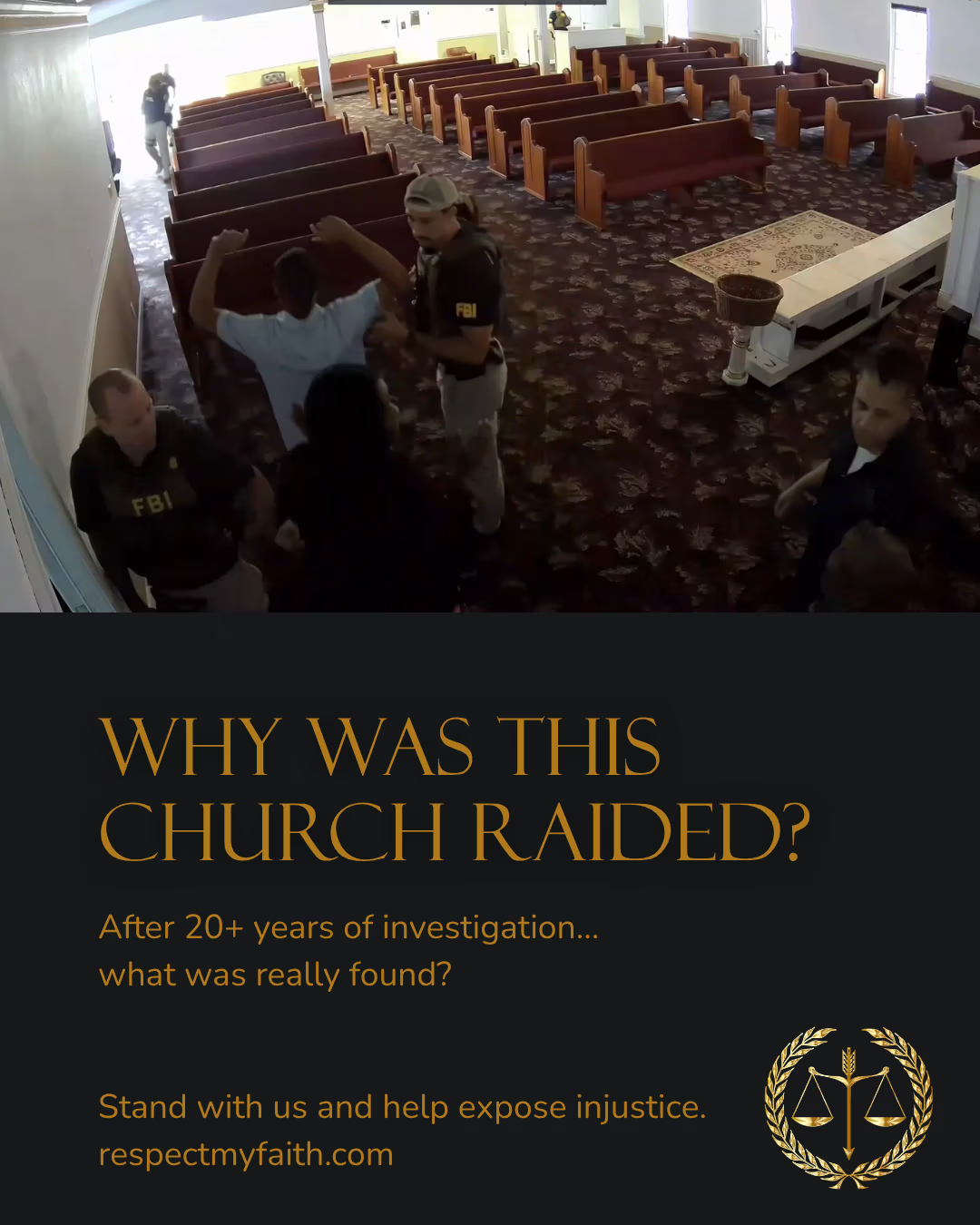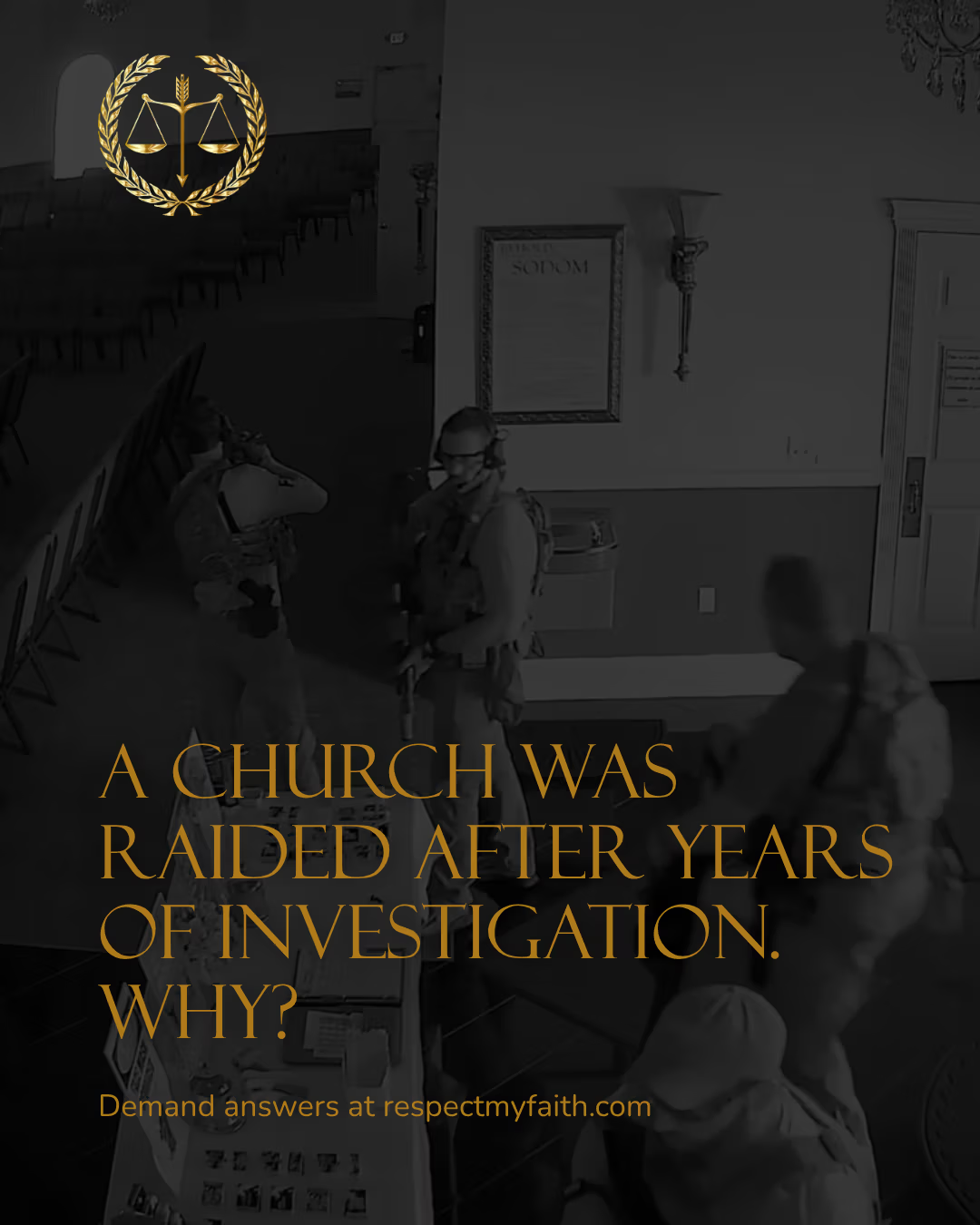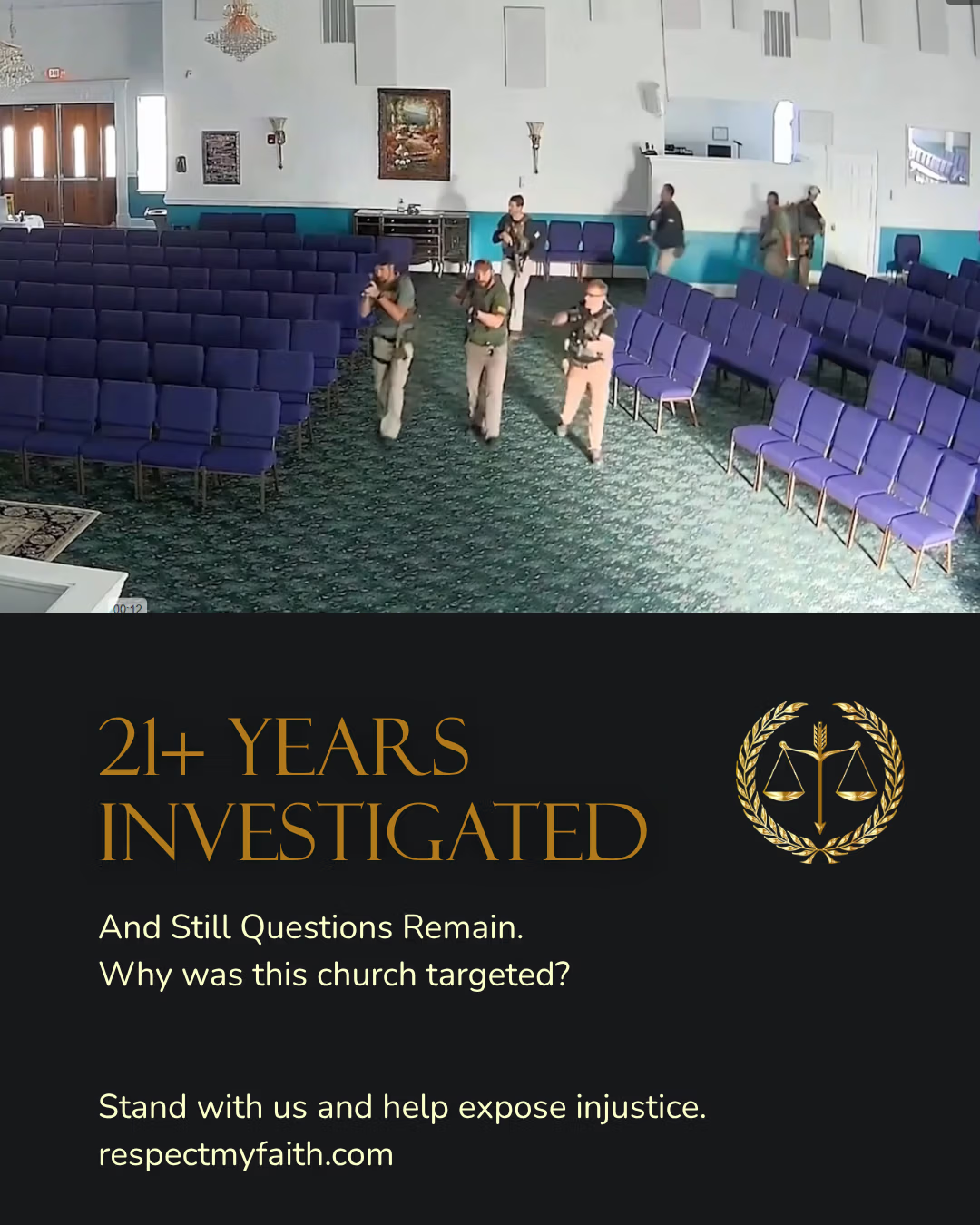
Featuring a church that has been investigated for over 20years
If you or your church have been victims of discrimination or mistreatment, please contact us. We want to feature your case!
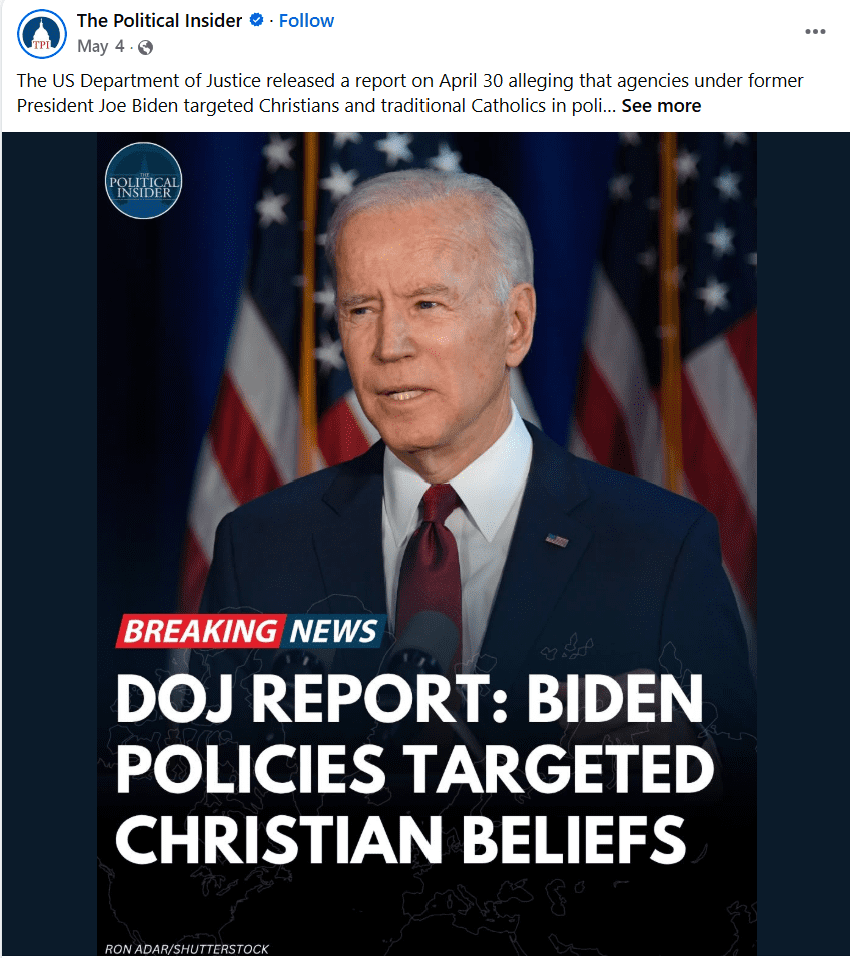
DOJ alleges 'systematic culture' of anti-Christian bias across federal agencies under Biden
Todd Blanche says the pattern went far beyond 'a rogue agent' or a single field office
Defend a Cause - Protect Our Rights
We refuse to bow, and we will not be silent while anyone tries to license, limit, or label our God-given right to believe.
We demand a nation where every person can worship, witness, or walk away according to conscience—without punishment from politicians, bureaucrats, disgruntled church members, and mobs.
We fight every day to protect religious freedom as a living right, not a dead promise, and we will stand our ground in the courts, in the streets, and at the ballot box until that freedom is secure for all.
What's the First Amendment?
The First Amendment is part of the Bill of Rights and protects key freedoms: religion, speech, press, peaceful assembly, and the right to petition the government. It says that Congress cannot establish an official religion or stop people from practicing their religion, and it cannot restrict free speech or a free press. It also guarantees that people can gather peacefully and ask the government to correct problems or injustices.
Who is Affected?
First Amendment violations directly harm the specific people or groups whose speech, religious practice, press activity, assembly, or petitioning is being restricted, punished, or censored by the government. They also affect the wider community, because when one person’s voice or religious freedom is silenced, everyone loses access to ideas, information, and examples of living out their beliefs. Over time, these violations damage the public’s ability to debate issues, hold leaders accountable, and participate fully in democratic life.
First Amendment Cases
The First Amendment is important to people of faith because it protects their freedom to worship, pray, and live out their beliefs without government interference. It also prevents the government from creating an official religion or favoring one faith over another, which helps churches, synagogues, mosques, and other faith communities all stand on equal legal ground. By safeguarding both the right to practice religion and the right not to be coerced in matters of belief, it supports freedom of conscience for believers and nonbelievers alike.
Your First Amendment Rights
Debates and court cases on religious freedom in government, schools and prisons
Ongoing national debate — and upcoming court cases— about the extent of First Amendment protections for religious freedom is also expected to remain prominent in 2026.
The U.S. Commission on Religious Liberty, established by President Trump in 2025, is tasked with issuing a report on the history and state of religious liberty in the nation by July 4, 2026, the 250th anniversary of U.S. independence.
According to a White House fact sheet, the report will address “parental rights in religious education, school choice, conscience protections, attacks on houses of worship, free speech for religious entities, and institutional autonomy.”
The topic of religious freedom will likely come up in federal government workplaces as well. A potential source of dispute involves new U.S. Office of Personnel Management workspace rules stating that personal religious expression by federal employees should be allowed to the greatest extent possible unless it imposes undue hardship on business operations. A Bloomberg Law report on the changes noted that critics have raised concerns about implementation, warning the policy could “prioritize the promotion of Christianity in the workplace at the expense of the rights of all federal workers, regardless of their faith traditions.”
In the past 40 years, the Supreme Court has shifted its interpretation of the First Amendment’s establishment and free exercise clauses from strict separation of church and state to more government accommodation of personal religious views — as seen in the OPM’s new workplace rules.
There will also be several court decisions in 2026 on the topic of religious freedom:
- The Supreme Court is set to decide whether a former Louisiana prison inmate may seek monetary damages after corrections officials shaved his dreadlocks despite religious objections. The inmate cited an earlier federal appeals court ruling that declared his First Amendment right to keep his hair and collect damages from government officials, under the Religious Land Use and Institutionalized Persons Act of 2000.
- In 2023, the Supreme Court held that a Colorado web designer had a religious freedom right to refuse to create a wedding website for a same-sex couple. In October 2025, after hearing a claim that cited the 2023 case, the Texas Supreme Court held that a county judge could decline to perform same-sex weddings without violating the state’s code of judicial conduct. First Amendment advocates anticipate additional lawsuits citing this ruling.
- The Supreme Court will also decide whether a preacher can challenge the 1871 Civil Rights Act on religious speech grounds. Lower courts have ruled the law bars his constitutional challenge to a Brandon, Missouri, ordinance restricting demonstrations near a city-owned amphitheater, as he had previously pleaded “no contest” and paid a fine for violating the ordinance.
- Another federal court is reviewing a proposed agreement between the Internal Revenue Service and several religious organizations. The agreement would remove tax penalties preventing religious groups from endorsing political candidates, under a rule known as the Johnson Amendment. Supporters of the new agreement say preventing such endorsements from the pulpit are unlawful restrictions on free speech and freedom of religion.
With implications extending into 2026 and beyond, a 2025 Supreme Court decision affirmed parental rights to opt children out of school instruction or materials that conflict with religious beliefs. Although the case involved LGBTQ+ reading materials, the ruling may prompt broader opt-out requests across a range of subjects that conflict with religious beliefs.